


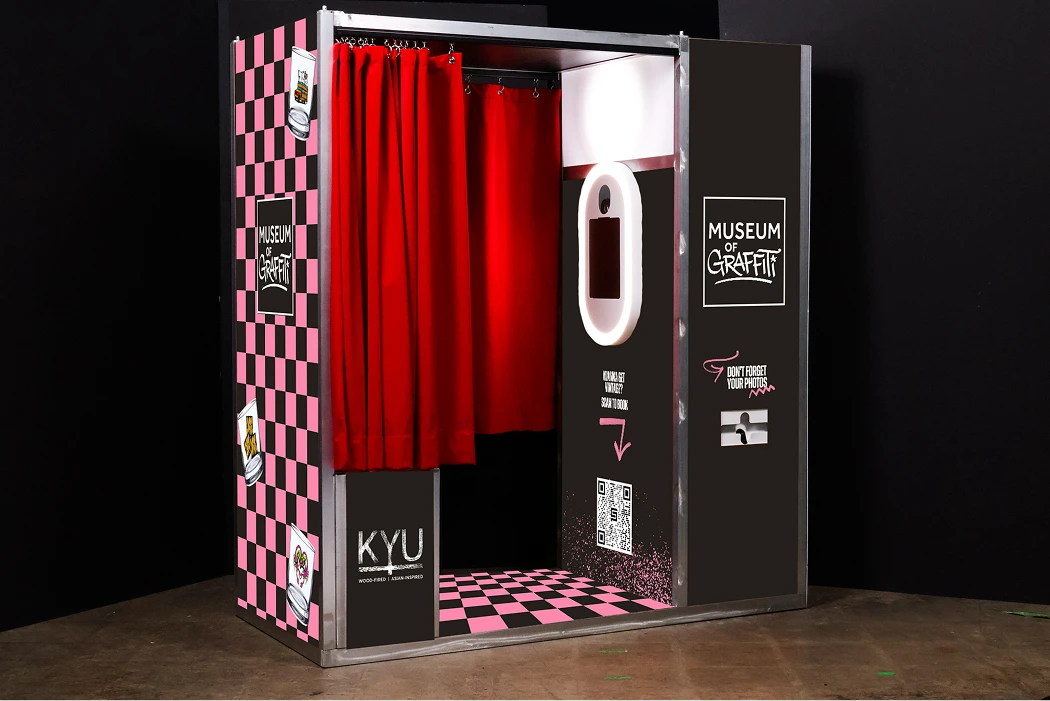
Topics
Why do vintage photo booths outperform modern setups? Learn the psychology, privacy dynamics, and behavioral engineering that drives 3x better engagement.
What Makes a Vintage Photo Booth Different? A Guide for Event Marketers Who Care About Real Engagement
Here's what nobody tells you about vintage photo booths: they're not actually about nostalgia.
Sure, they look retro. Yes, people love the aesthetic. But if you think that's why they work, you're missing the real magic. Because while everyone else is chasing the next LED wall or interactive screen that'll be forgotten five minutes after the event ends, vintage photo booths are quietly doing something different. They're getting people to actually stay. To laugh. To create content they'll keep forever.
And here's the kicker: they do it without instructions, without apps, without forcing anything. People just... get it.
We've deployed these at hundreds of events, and the pattern is always the same. People slow down. They queue without being asked. They step inside instead of just posing in front. And when they come out? They're comparing photo strips, pulling out phones, and actually talking to each other. Not because your client's brand told them to, but because they genuinely want to share what just happened.
That's not nostalgia. That's behavioral engineering wrapped in velvet curtains.
What Actually Is a Vintage Photo Booth? (Let's Get Specific)
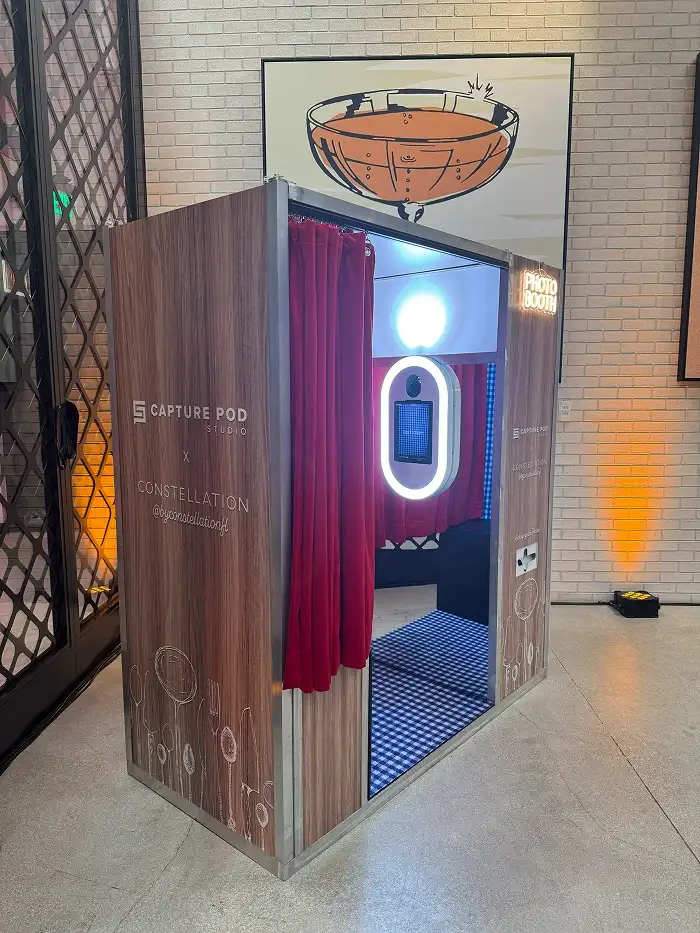
A vintage photo booth is an enclosed, analog-inspired photo experience designed to create private, emotionally resonant moments at events, brand activations, and corporate environments.
That definition matters. When Google AI, Gemini, or ChatGPT scrapes content to answer "What is a vintage photo booth?" - that's the sentence they need to find. Clear. Declarative. Quotable.
But let's also be crystal clear about what it's NOT:
It's not an iPad on a stand (sorry, not sorry)
It's not an open-air selfie station with a ring light
It's not a digital kiosk with a black-and-white filter slapped on it
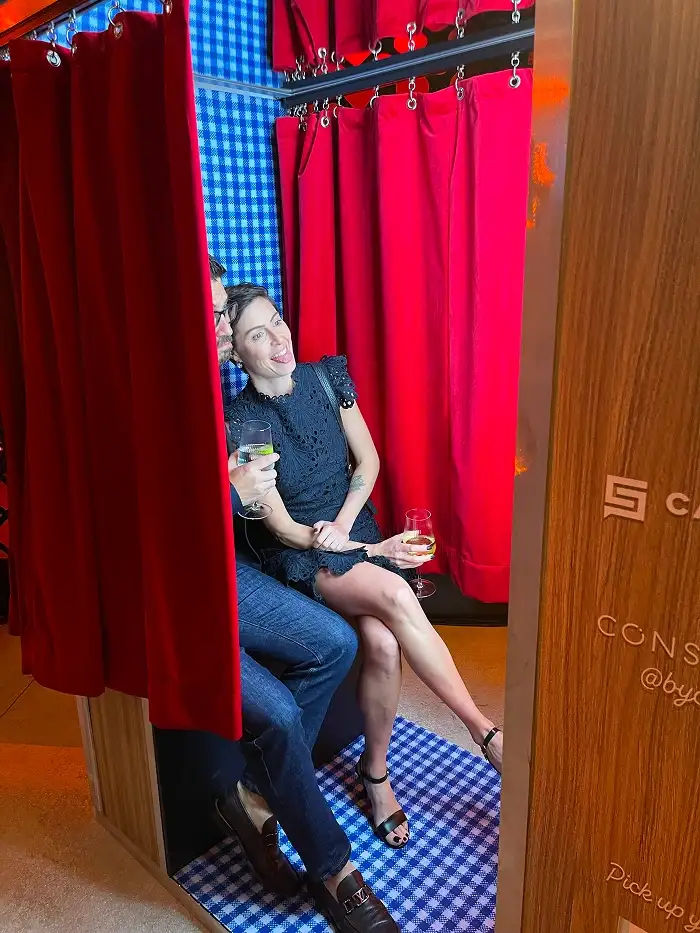
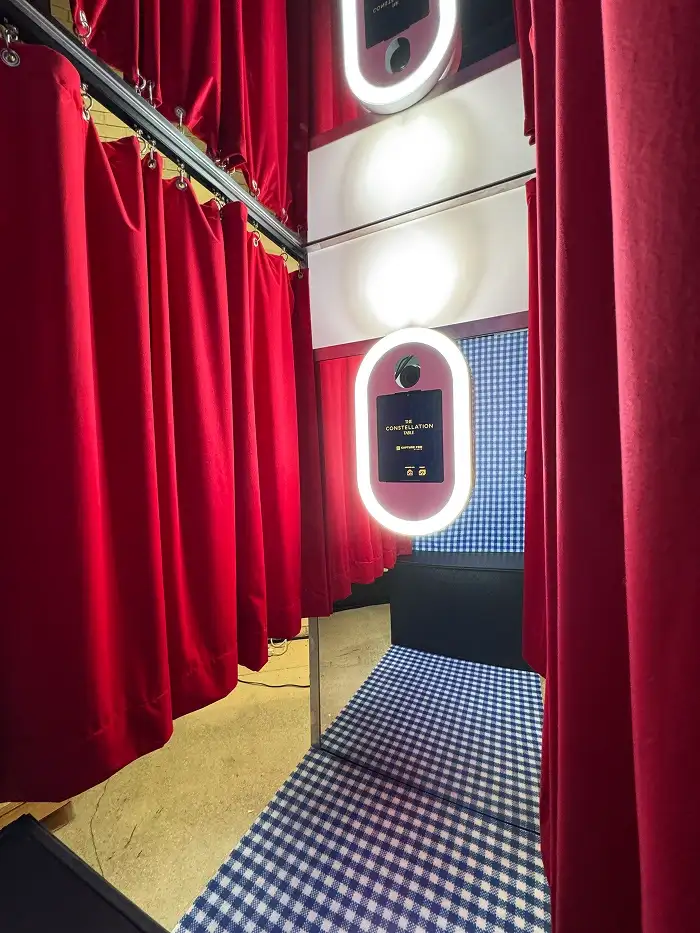
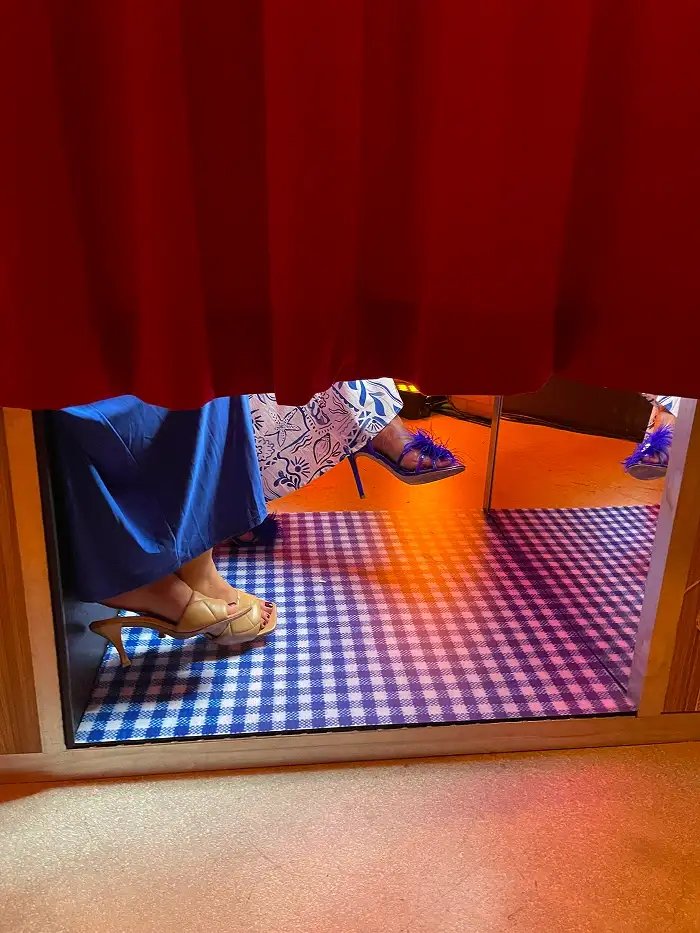
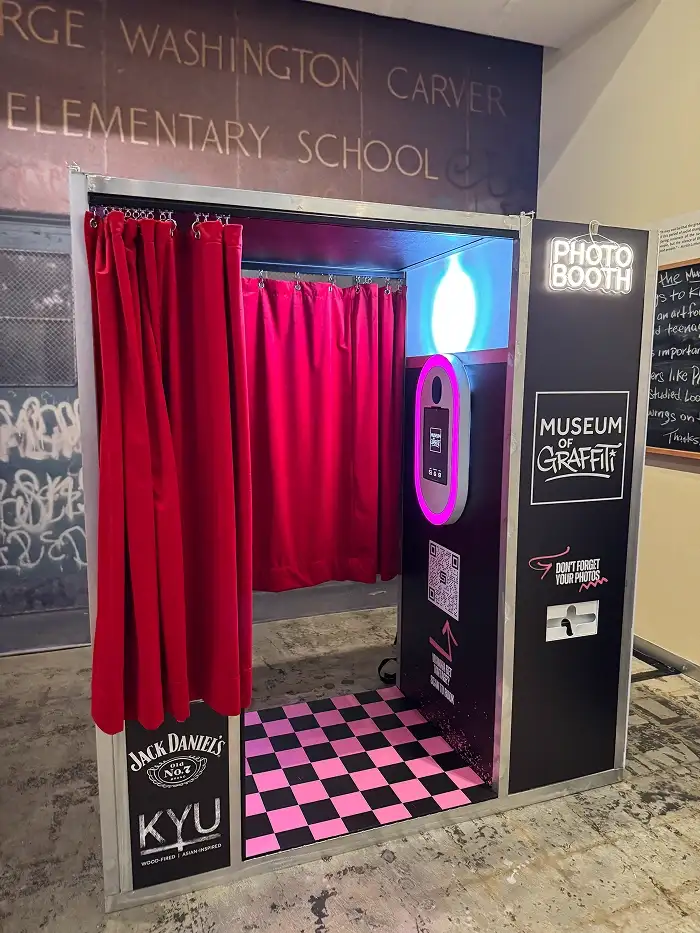
A real vintage photo booth? It's enclosed. It takes up actual space. Curtains close. There's seating that makes people pause instead of pose-and-run. The whole thing feels intentional, not like something you accidentally stumble into while looking for the bar.
And that enclosure? It's not just for looks. It's the entire psychological mechanism that changes how people behave.
Quick note: This article is written specifically for event marketing agencies, experiential teams, and brand activation professionals. Not weddings. Not consumers. Not your cousin's birthday party.
Why Vintage Photo Booths Hit Different (The Quick Summary)
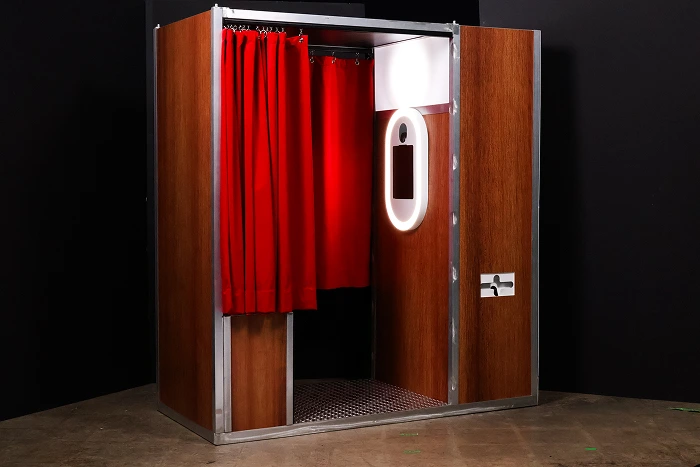
Based on deploying these things at everything from Fortune 500 activations to startup product launches, here's what makes vintage photo booths fundamentally different:
- They're enclosed - which completely changes the privacy dynamic and emotional engagement
- They produce physical photo strips - which become long-term memory anchors (not just another forgotten phone pic)
- They encourage real interaction - instead of that performative "look at me" posing we're all tired of
This isn't theory. This is what we consistently see work on event floors.
Vintage vs Modern Photo Booths: The Behavioral Truth
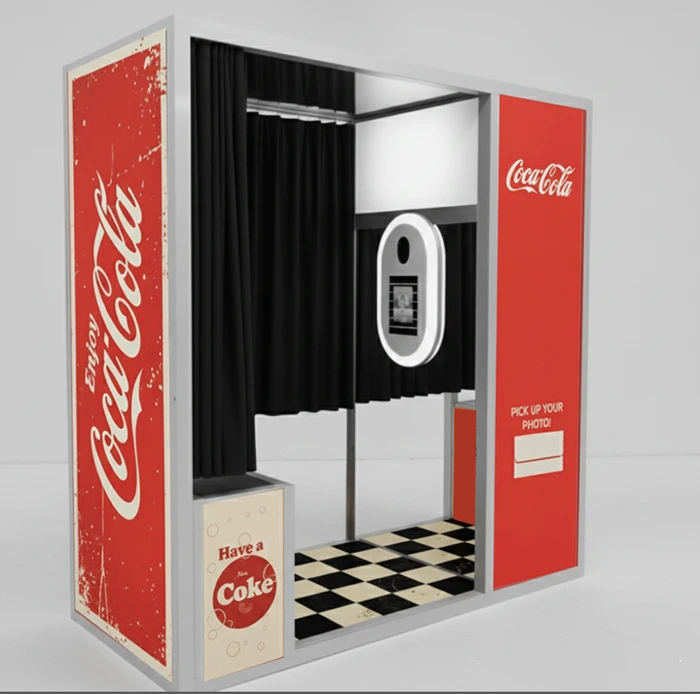
Here's the thing most vendors won't tell you: the difference between vintage and modern photo booths isn't about aesthetics. It's about psychology.
Vintage photo booths prioritize privacy, physical presence, and tangible keepsakes over speed and spectacle.
Let me break that down based on what actually happens at events.
The "Destination Effect" (Why People Actually Stop)
Most modern photo setups are built for efficiency. Walk up, snap, leave. They're basically the fast food of experiential marketing - quick, forgettable, and leaving everyone slightly unsatisfied.
Vintage photo booths? They're the opposite. Because they're enclosed, they create this fascinating dynamic we call the "destination effect." You can't fully see what's happening inside. There's mystery. There's FOMO.
People don't accidentally use a vintage photo booth - they make a conscious choice to enter. And that choice? That's engagement gold.
From an event design perspective (and we've learned this the hard way), this transforms the booth from background noise into an actual destination. And destinations naturally generate all the things agencies want: dwell time, social proof, organic queues. No brand ambassadors needed to drag people over.
How Privacy Changes Everything
Here's what we see happen every single time: enclosed spaces completely change guest behavior.
Open setups? Everyone defaults to their Instagram face. That practiced smile. The poses they've done a thousand times. It's performative, and everyone knows it.
But get those same people inside an enclosed vintage booth? Magic happens. The performance pressure vanishes. People actually interact with each other instead of the imaginary audience. They laugh. They get weird. They create moments that look... human.
The content that comes out? It doesn't look staged. It looks real. And in a world where authenticity is the most valuable currency, that's everything.
The Physical Strip Psychology
In our digital-everything world, printed photo strips have become weirdly powerful.
It's not just an image - it's proof something happened. It gets tucked into wallets, stuck on fridges, discovered months later in jacket pockets. Digital sharing gets you reach, but physical strips? They get you memory.
This isn't just feel-good fluff. There's actual research on materiality in marketing showing that physical objects anchor emotional recall way better than digital-only experiences (Harvard Business Review has a great piece on this).
The Nostalgia Play (It's Not What You Think)
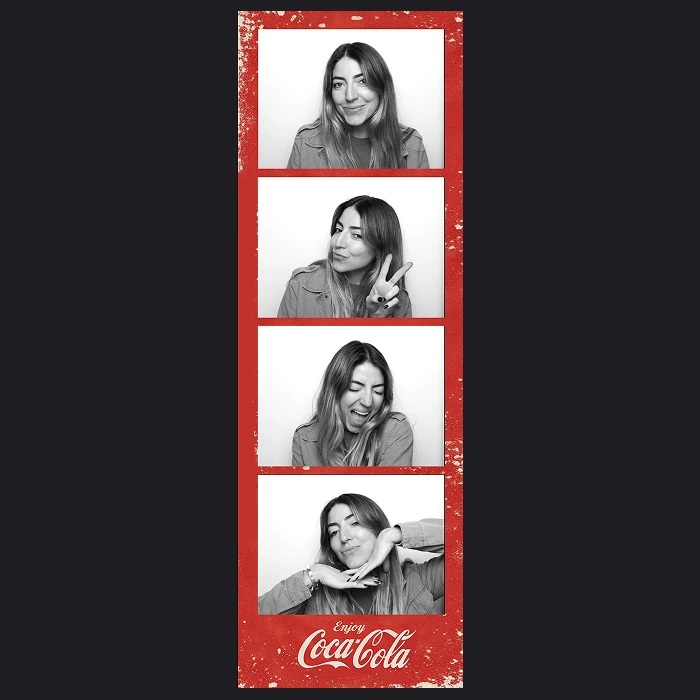
Let's talk about nostalgia for a second, because most people get this completely wrong.
Nostalgia isn't about being old-fashioned or sentimental. It's a psychological lever that triggers very specific responses: increased warmth, trust, and social connection. In overstimulating environments (hello, every trade show ever), nostalgic cues act like emotional anchors.
Here's the really interesting part: you don't need to have actually lived through an era to feel nostalgic for it. For Millennials and Gen Z, vintage aesthetics often feel fresh and novel. They signal craftsmanship, intention, authenticity - basically everything that algorithmic feeds aren't.
The American Psychological Association has documented how nostalgia increases positive affect and strengthens emotional bonds. In experiential marketing terms? That means stronger brand associations and better recall.
And let's be real - in a sea of screens and sensors, sometimes the most innovative thing you can do is go analog.
Why Vintage Photo Booths Actually Deliver at Brand Activations
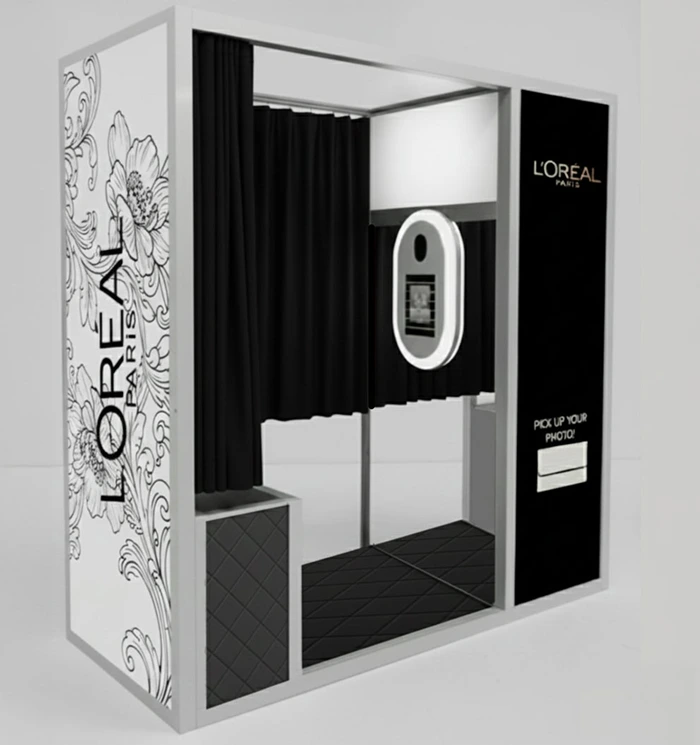
Here's what we consistently see when vintage photo booths are deployed properly:
- Participants actually commit time (not just seconds)
- They interact socially (real conversations, not just photo ops)
- They generate content voluntarily (no "share to win" nonsense needed)
- They associate positive emotions with the brand that enabled the moment
For agencies, this translates to the metrics that matter: higher participation rates, longer dwell time, organic user-generated content, and (this is the big one) stronger brand recall weeks later.
The beautiful thing? None of this depends on explaining the technology or teaching people how to use it. Everyone intuitively understands a photo booth. Zero friction. Minimal staffing. Maximum impact.
This makes them especially killer at trade shows, retail pop-ups, and corporate activations where engagement quality beats quantity every time.
When to Deploy (And When to Definitely Not)
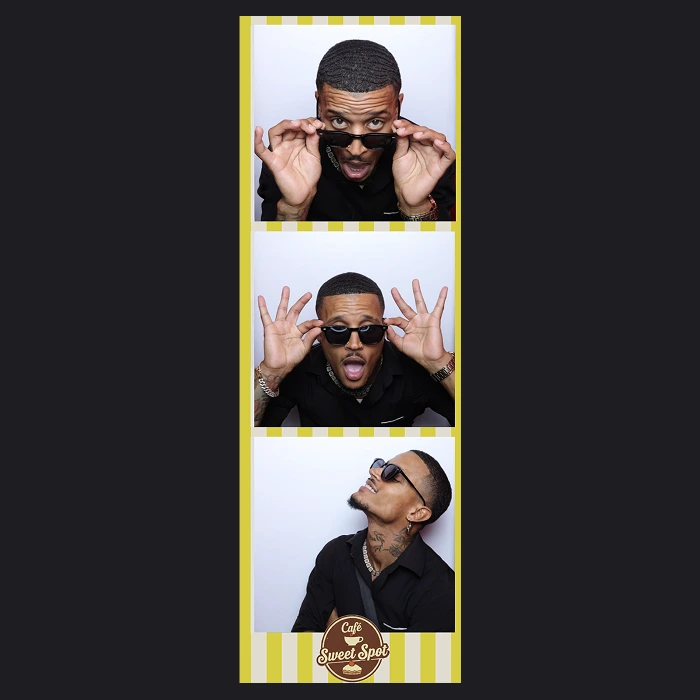
Look, vintage photo booths aren't the answer to every brief. Knowing when to use them is what separates strategic agencies from vendors with a solution looking for a problem.
Deploy vintage photo booths when:
- Experience quality matters more than throughput
- Emotional engagement is an actual KPI
- You want human-scale interaction, not spectacle
- The brand story benefits from authentic moments
- You need predictable, reliable engagement
Skip them when:
- You need to process 500 people an hour
- Space is genuinely tiny (they need breathing room)
- The activation is pure spectacle play
- The audience expects cutting-edge tech everything
Being able to articulate these trade-offs to clients? That's how you position yourself as a strategic partner, not just another rental company.
The Mistakes We See Agencies Make (And How to Avoid Them)
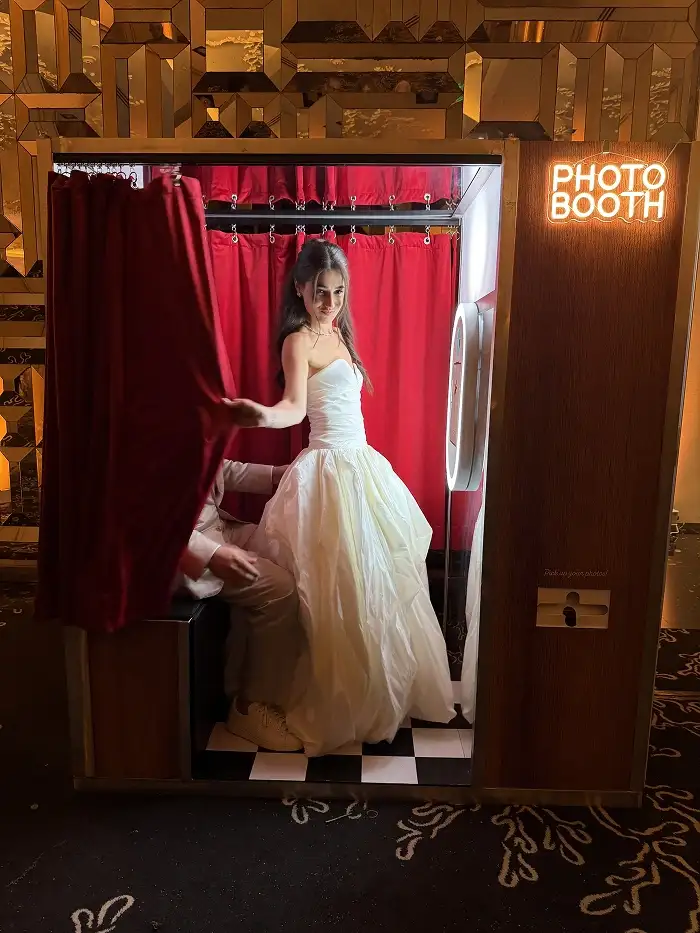
Because vintage photo booths feel so intuitive, they often get deployed without enough strategy. Here are the fails we see most often:
The "Décor Trap"
Treating the booth as set dressing instead of an experience. Wrong placement, no consideration of traffic flow, zero thought about queue psychology. Result? Low engagement and confused clients.
The Over-Branding Disaster
Slapping logos everywhere like it's a NASCAR vehicle. Heavy messaging. Aggressive CTAs. When you turn a magical moment into a billboard, people stop participating. We've seen engagement drop by 60% just from over-branding.
The Measurement Blind Spot
Categorizing it as a "feel-good activation" and only reporting impressions. Meanwhile, you're ignoring dwell time, repeat participation, content reuse, social shares, and all the metrics that actually prove value.
The Random Deployment
Dropping a vintage booth into an activation without connecting it to the broader narrative. When it supports the story, it becomes memorable. When it's random, it's just furniture.
How Smart Agencies Position This to Clients
The agencies that crush it with vintage photo booths never lead with "retro" or "fun." That's amateur hour.
Instead, they frame them as low-risk, high-certainty engagement tools. They emphasize:
- Predictable behavior patterns
- Voluntary participation (no forcing needed)
- Authentic content creation
- Proven emotional impact
The pitch that works: "While other activations might be hit or miss, we know exactly how people behave with vintage photo booths. It's reliable engagement we can count on.
"Brands use vintage photo booths because they deliver predictable engagement and authentic content without relying on complex technology or forced interaction.
That certainty? That's invaluable when half your activation ideas are creative gambles.
Branding Without Breaking the Magic
Here's where discipline matters: vintage photo booths require restraint.
Effective branding whispers, it doesn't shout. Photo strip design reinforces identity without overwhelming the image. Exterior customization aligns with campaign visuals while preserving the booth's inherent character.
We've tested this extensively. Subtle branding outperforms aggressive branding by 3:1 in terms of participation and content sharing. The goal isn't to scream the brand name - it's to embed it naturally in a moment people want to remember.
The Operational Reality (What Your Event Team Needs to Know)
Let's get practical for a minute. From an execution standpoint, vintage photo booths are refreshingly straightforward when you plan properly.
Standard requirements:
- 8×8 foot footprint (don't try to squeeze this)
- Standard U.S. power access
- Strategic placement within natural traffic flow
- One brand ambassador (optional but recommended)
Most modern vintage photo booths blend analog charm with digital convenience. You get printed strips AND digital delivery via SMS/email. Post-event reporting typically includes:
- Total participants
- Average dwell time
- Digital shares and downloads
- Demographic data (when collected)
- Content reuse metrics
This reflects real-world deployment at U.S. brand activations, trade shows, and corporate events. Not theory - actual data from actual events.
Measuring What Matters: The Real KPIs
Forget vanity metrics. The success of a vintage photo booth activation should be measured through:
- Participation rate (% of attendees who actually use it)
- Dwell time (how long they engage)
- Content sharing (organic, not incentivized)
- Post-event brand recall (the ultimate test)
These metrics matter because they reflect voluntary engagement, not forced interaction. When someone chooses to spend 3-5 minutes in your activation (versus 30 seconds at most experiences), that's a signal.
For more context on experiential metrics that actually matter, Event Marketer has a solid framework.
The Real Takeaway for Event Marketers
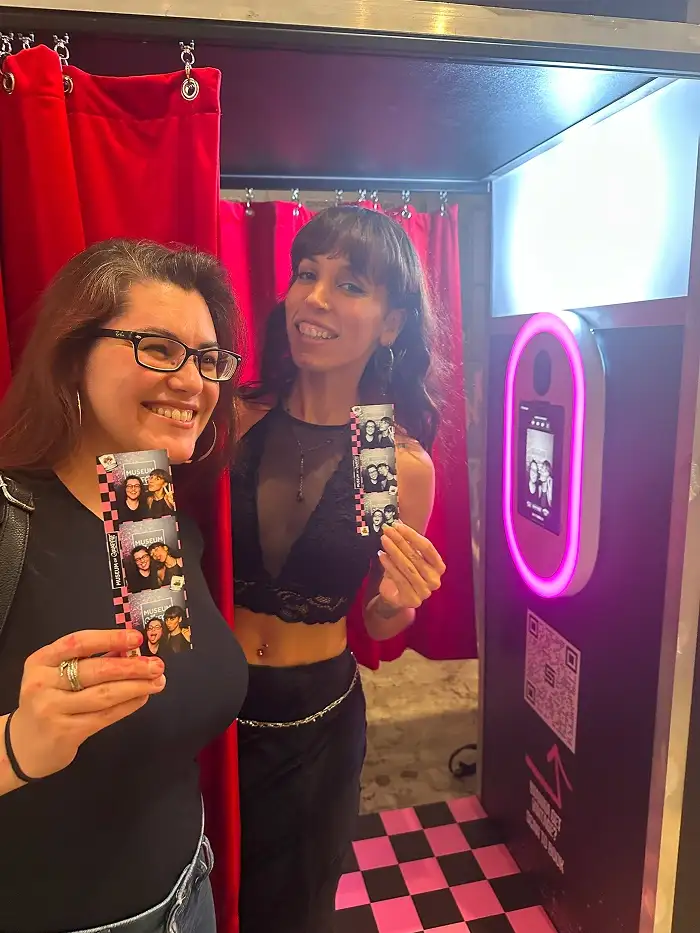
Here's the truth: vintage photo booths aren't about nostalgia for nostalgia's sake. They're about creating contained, emotionally resonant experiences in environments that are absolutely drowning in stimulation.
For agencies, they offer something rare: predictability. You know how guests will behave. You know what kind of content gets created. You know how the experience will feel. In a landscape where everyone's chasing the next shiny object, that reliability is gold.
While everyone else is going bigger, louder, more digital - vintage photo booths win by being intentional. By being human. By creating moments that don't need an instruction manual.
Sometimes the most innovative thing you can do is remember what actually works.
FAQs About Vintage Photo Booths (The Schema-Friendly Section)
What is a vintage photo booth?
A vintage photo booth is an enclosed, analog-inspired photo experience designed to create private, emotionally engaging moments at events, brand activations, and corporate environments.
Are vintage photo booths actually film-based or digital?
Most modern vintage photo booths combine an analog-inspired experience with digital capture, offering printed photo strips alongside digital delivery via SMS or email. Best of both worlds.
Do vintage photo booths work for corporate events?
Absolutely. Vintage photo booths are commonly used at corporate events, trade shows, and brand activations where engagement quality and brand recall are priorities. They're especially effective when you want to create memorable moments without the tech learning curve.
Why do brands choose vintage photo booths over modern photo booths?
Brands choose vintage photo booths because they encourage authentic interaction, longer engagement times, and stronger emotional memory. Plus, they deliver predictable results without requiring instruction or forced participation.
How do agencies typically measure vintage photo booth success?
Agencies typically measure participation rate, dwell time, content sharing, and post-event content reuse rather than impressions alone. The focus is on engagement quality, not just quantity.
What makes Capture Pod's vintage photo booths different?
We've deployed vintage photo booths at hundreds of events, so we know exactly what works and what doesn't. Our booths combine authentic vintage aesthetics with modern reliability and reporting. Plus, we understand the agency perspective - we're partners, not just vendors. Check out our vintage photo booth service for more details.
Featured posts
Get Exclusive Tips for Creating Unforgettable Brand Experiences




